
What is Finish Carpentry? Everything to Know Before You Hire
Finish carpentry is the trim and interior woodwork installed during the final stages of construction, including baseboards, casing, crown moulding, doors, built-ins, and other visible details that give a home its finished look. It's the last phase of construction, and it's often the phase that determines whether a room feels polished or just done.
If you're planning a remodel or trying to make sense of a quote, here's what finish carpentry covers, what separates good work from average work, and when it's worth hiring a professional.
Finish Carpentry vs. Rough Carpentry
Rough carpentry builds the structure of a home. Finish carpentry completes the visible details.
Rough carpentry includes framing, subfloors, roof structures, and other structural components that create the framework of a home. Finish carpentry focuses on the work you see and interact with every day, including baseboards, window and door casing, crown moulding, interior doors, built-ins, stairs, and railings.
Both require accuracy, but finish carpentry demands a high level of visible precision. Tight joints, consistent reveals, clean transitions, and properly fitted trim all affect the finished appearance. Because walls, floors, and openings aren't always perfectly square, experienced finish carpenters know how to fit and adjust each piece so the completed work looks intentional and consistent.
What Finish Carpentry Includes
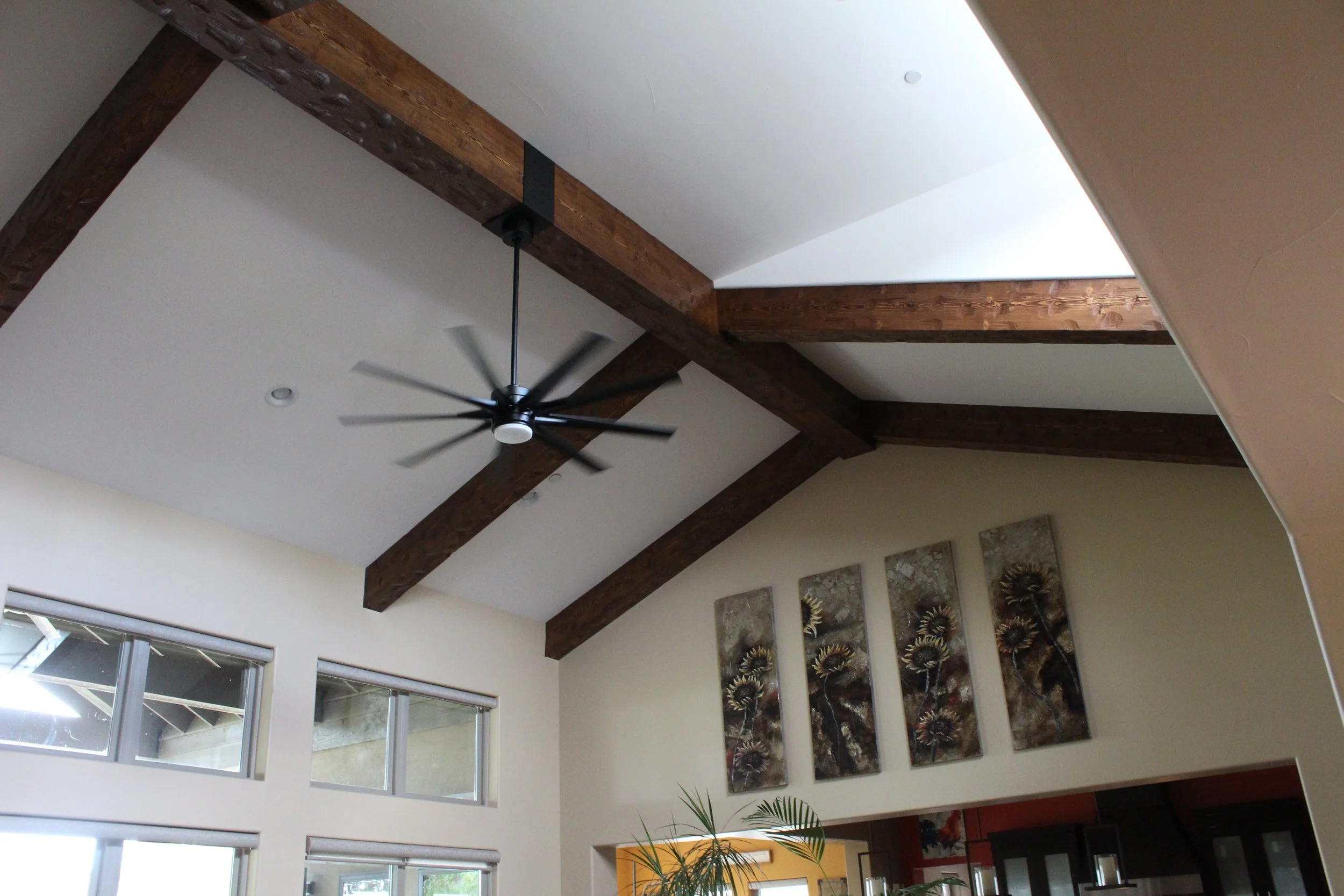
Finish carpentry includes baseboards, crown moulding, window and door casing, interior doors, built-ins, stair components, railings, wall moulding, and custom millwork.
Baseboards and casing create finished transitions around floors, windows, and doors. Crown moulding and ceiling trim finish the transition between walls and ceilings. Built-ins such as bookcases, shelving, mudroom benches, and cabinetry-style millwork add storage designed specifically for the space.
Stair treads, risers, railings, balusters, and newel posts also involve finish carpentry and require particular attention to fit, appearance, and applicable building codes.
For a closer look at how these categories overlap and where they differ, our guide to interior trim types breaks down the specific styles and where each one works best.
Attention to Detail Matters in Finish Carpentry
The quality of finish carpentry shows up in the details you don't consciously notice.
Consistent reveals, tight miters, and seams that stay flush over time are what separate work that ages well from work that needs recaulking in two years. A finish carpenter's job is measuring and cutting for a house that isn't perfectly square, since almost none are, and making the finished trim look like it is anyway. That's a skill that comes from experience, not just tools.
DIY or Hire a Pro
Simple, small-scale trim work can be a reasonable DIY project. Custom millwork, whole-home trim packages, complex stairs, and railing systems are usually better suited to an experienced finish carpenter.
Installing a single prefinished baseboard in a small room is within reach for a patient homeowner with the right tools. Coordinating trim across an entire house, working around uneven walls, or installing complex stair or railing systems is a different scope of problem. Mistakes in finish carpentry are also expensive to fix after the fact, since correcting a bad miter or a crooked casing usually means redoing the piece rather than patching it.
The more visible the work and the more pieces that need to align across a room, the more important professional measuring, cutting, fitting, and installation become.
Where Finish Carpentry Fits in a Remodel
Finish carpentry happens during the later stages of a remodel, after major structural and drywall work is complete and before final project completion.
Planning it alongside the rest of the project, rather than as an afterthought, makes it easier to coordinate trim styles, casing profiles, and built-ins with everything else going into the space. Learn more about what to expect during a home remodel and how the different phases of a project, including finish carpentry, typically come together.
What to Look for When Hiring a Finish Carpenter
Look for a finish carpenter with experience in the specific type of trim or millwork your project requires. Review completed projects for consistent reveals, tight joints, clean transitions, and trim that fits the architecture of the home. For custom work, ask whether components are fabricated in-house or ordered as standard profiles. You should also confirm the project scope, materials, finishing responsibilities, timeline, and how the carpenter handles existing walls and openings that aren't perfectly square.
Custom Finish Carpentry From RIFFS Construction
Finish carpentry is what turns a structurally sound house into a finished home.
The details, baseboards, casing, moulding, built-ins, are what most people notice first and remember longest, even if they can't always say why a room feels finished. RIFFS Construction handles finish carpentry projects across Northern Nevada, from single-room trim upgrades to full-house packages, with an in-house millwork shop for custom work standard trim can't match. Learn more about our finish carpentry services or reach out for a quote today.